WiskyDan
Jetboaters Admiral
- Messages
- 1,741
- Reaction score
- 4,230
- Points
- 297
- Location
- Jackson, WI
- Boat Make
- Yamaha
- Year
- 2018
- Boat Model
- 242 Limited S E-Series
- Boat Length
- 24
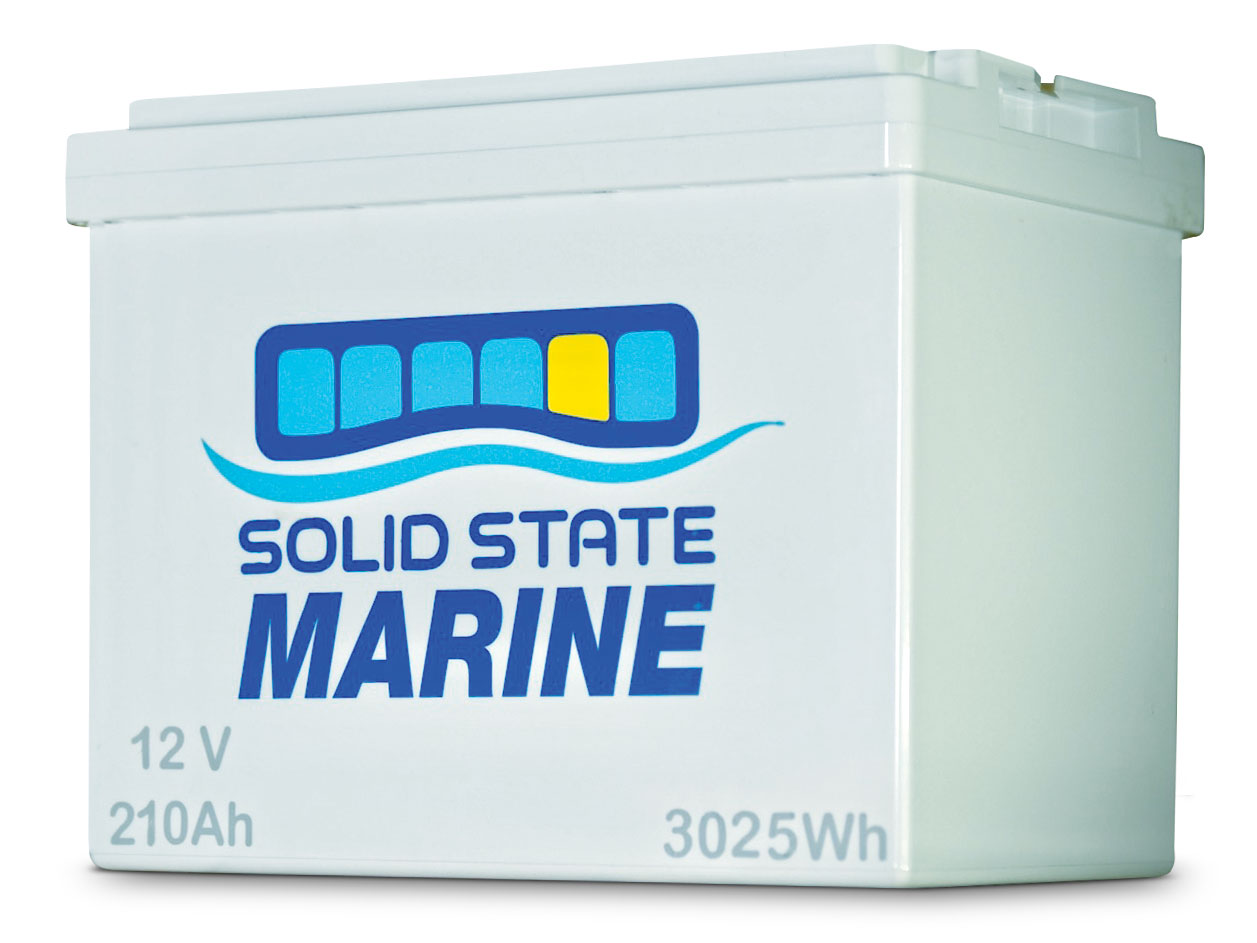
This popped up on my Facebook feed - pretty interesting:

 solidstatemarine.com
So these are a type of lithium battery that they claim are even lighter than standard lithium due to solid-state cells instead of liquid ones. They also claim that they are lighter than standard lithium batteries, have a higher energy density, charge faster, and can be used in temperatures as low as -4F.
They are a US company (looks like the batteries are designed/supported/assembled in the NE) and appear to be focused on marine applications. They also have dual purpose batteries that can be used as a start battery which is convenient if you only have room for one battery. They are pricey (90Ah is $1249 and 120Ah is $1625) but I'm interested in seeing more real-world reviews and how they hold up.
Higher energy density: More power/lb
Dramatically improved safety: no liquid = near-zero fire risk, even when damaged
Longer life: thousands of cycles with minimal degradation.
Faster charging: higher current tolerance without overheating or plating
Wider operating temperature: –4°F to over 155 °F
At the heart of every Solid State Marine battery is a revolutionary solid electrolyte that replaces the flammable liquid found in traditional lithium-ion (LFP) and lead-acid packs. By eliminating the liquid, we shrink the distance ions travel between anode and cathode to almost nothing.
The result?
- Dramatically higher energy density
- Ultra-fast charging
- Half the weight and size
- Extremely low risk of thermal runaway
- A lifespan that outlasts conventional batteries by years
Built for the harshest marine conditions, our solid-state technology delivers unmatched power, safety, and reliability — so you can push farther, charge faster, and navigate with total confidence.
About us
WHO WE ARESolid State Marine Inc. was established in 2023 and is based in West Bridgewater, Massachusetts. We are committed to pioneering the development and production of innovative, high-performance solid-state battery solutions for the maritime market. Our mission is to provide boaters with...
solidstatemarine.com
So these are a type of lithium battery that they claim are even lighter than standard lithium due to solid-state cells instead of liquid ones. They also claim that they are lighter than standard lithium batteries, have a higher energy density, charge faster, and can be used in temperatures as low as -4F.
They are a US company (looks like the batteries are designed/supported/assembled in the NE) and appear to be focused on marine applications. They also have dual purpose batteries that can be used as a start battery which is convenient if you only have room for one battery. They are pricey (90Ah is $1249 and 120Ah is $1625) but I'm interested in seeing more real-world reviews and how they hold up.
The Future Is Solid:
Solid-state batteries replace the flammable liquid electrolyte with a solid one, unlocking major advantages:Higher energy density: More power/lb
Dramatically improved safety: no liquid = near-zero fire risk, even when damaged
Longer life: thousands of cycles with minimal degradation.
Faster charging: higher current tolerance without overheating or plating
Wider operating temperature: –4°F to over 155 °F
Why Solid State Marine Stands Alone
We didn’t just improve the battery — we reinvented it.At the heart of every Solid State Marine battery is a revolutionary solid electrolyte that replaces the flammable liquid found in traditional lithium-ion (LFP) and lead-acid packs. By eliminating the liquid, we shrink the distance ions travel between anode and cathode to almost nothing.
The result?
- Dramatically higher energy density
- Ultra-fast charging
- Half the weight and size
- Extremely low risk of thermal runaway
- A lifespan that outlasts conventional batteries by years
Built for the harshest marine conditions, our solid-state technology delivers unmatched power, safety, and reliability — so you can push farther, charge faster, and navigate with total confidence.
Last edited: